Copyright © 2014-2017 Software Developer Life Blog - All Rights Reserved.
Subscribe to Software Developer Life Blog
Search Articles Of My Blog

2016-07-23

Short Snapshot #9: From nothing to driven by skills with no direction to creating a mental map that placed purpose to aligning skills with mental map

From nothing

I remember my first days when I was 15 years old. I was really determined on learning more about technology. I used to be a passive consumer enjoying the immersion technology provided. I guess I have no much shame to say that as I think the majority of us land there as our primary and main destination. In the circa time 1997-2003 while I was 9-15 years old, the first 3 years of that period was an inception of the world wide web being more widespread than ever before. The major points during that time for kids our age was:

1. Nintendo 64 for the fist time had the ability to render 3 dimensional playable games.
2. The computer was booming in the world wide web with 30-second video clips or songs from famous cartoons or tourist destinations in inferior youtube 144p quality with dial-up modem 56k connection.
3. There were a lot of free video game demos on downloads.com, such as riding large monster trucks through dirt or space cars in a future apocalyptic highway.

Although limited, for us kids they were more enough to drool around. I am pretty sure there was more educative content around that time, but I believe most passive consumers at such young age would browse those websites on their free time, especially if your computer was shipped with Windows. After some point, the content of the internet exponentially grew to a point which the traditional search engine Yahoo couldn't keep up, and the rest is history.

Above are just two images of two PC demo games I used to download on the old layout of downloads.com before it was merged with CNET: croc and monster truck madness.

Skills with no direction

Then, while I was on vacation after one of my summer breaks in high school, I had the opportunity to spend some of my free time to stumble myself on learning some new programming language by reading the book "Sams Teach Yourself C++ in 21 Days" by Jesse Liberty. I tried other books before that, such as "The C++ Programming Language" by Bjarne Stroustrup, but they were too deep, not practical enough. I was at this stage where I didn't know what you could do with a programming language and never heard the word compiler before. Beyond that this book was very popular, it shouldn't be confused with other book mockups "Teach yourself... in 21 days". This book didn't try to skip foundational parts of the programming language. It discussed topics related to the hardware of the computer, such as how pointers have a tangible connection with allocated memory. In other words, although it said you could learn all this material in 21 days, it took me about 1-2 quarters to complete reading the book, as I had no previous experience in programming before. It was really fun learning all the stuff that you could do with a computer. I was kind of determined already that I wanted to be a programmer at that time.

I bought Bjarne Stroustrup book because it was recommended by the bookstore. It was too deep for me, I need it something more elementary, so I picked later on during vacation C++ in 21 days.

At my last years of high school, I tried to compete in one programming competitions centered on high school students. It consisted of solving puzzles by using a programming language of your choice and using the appropriate algorithms. I had no idea what algorithms was all about. There was one puzzle that I had to solve by using Dijkstra's algorithm. I thought all problems could be solved by common sense. It was like I was ignoring all the arduous efforts others spent enough time and I was going back in time to be the first one to find the algorithm instead. After a lot of effort figuring it out myself, I gave up. I found a link that portrayed the steps of using Djikstra's algorithm. What is fascinating is that I was a beginner on programming. I had no experience of using any libraries at all. There were at that time a lot of libraries that contained elements that could solve Djikstra's algorithm. If I used those, I could have solved this puzzle with less than a couple dozen lines of code. At least, the code that way wouldn't be so complex while reading it. However, I spent a lot of time just by using multidimensional arrays. I managed to pass all the test cases and was accepted to compete in the final round of the national competition. This was my first time entering in such competition. I only started to solve puzzles within the last 3 months at that time. Compared to other competitors who studied algorithms for years, I knew that I could be outnumbered. I remembered that I had to take those big fat computer programming books within my school in order to prepare myself for the competition. I was actually ignoring the lectures and the study material within my high school for the sake of preparing myself to compete well. Some classmates would compliment me on what I was doing while teachers could condemn me for not being able to remember the school lecture notes. It was a mixed feeling, but I didn't regret it. I was able to solve some of the puzzles within the national competition. I was outnumbered and was not able to participate in the global competition. I ended up in 12th place. Besides that I felt it was remarkable how far I reached up to the competition based on how much time I spent on puzzles and algorithms, I already knew at that time programming was my career choice with no doubts.
This is just an illustration and a diagram of the puzzle that requires Dijkstra's Algorithm that I had to solve. The exercise of the project is named Acropolis. Click here for the complete puzzle.

When I was at college, my goal was to study computer science. Computer Science majors have to study a lot of maths and physics. However, an accident happened. It seems fate can be changed by an opportunity you accidentally do. What happened was: While I was at San Diego City College in the first semester, I mistook some classes that were not for the degree path of getting a major in computer science but instead to a major in business administration. I thought business law and business communication was general education classes all students had to take and I did those for the first semester. When I completed the business law class, it fascinated me. I conclusively figured out that complexity did not exist only within computer world, complexity also existed in the social world for centuries. There was so much critical thinking on solving these puzzles of human behavior with the use of law and order. There were so many similarities to the things I learned in computer programming, I indeed wanted to learn more how the social world operated as well. I realized on the second semester from my advisor that I was on the wrong career path to get my computer science degree. In addition, the amount of additional courses of math and physics I had to go through would require delaying my degree for at least a year from the existing degree path I was taking. It was this accident that guided me to see things from new perspectives, to get a degree in Business Administration: Computer Information Systems. For the next 5 years, I did the most deliberate learning on this interdisciplinary major. I ended up getting a CGPA of 3.95. To this day, I still associate and reference through my expressions and decisions from the lectures that I completed, especially within the business, computer information system, and physical and social science domains.

Right now I work in data stuff within my career. I only completed only one data course in my university and I had no clue how to use SQL besides doing the basic stuff. The lecturer at that time that was teaching databases solved database solutions that I didn't understand at all that I just copied and paste. From work experience in creating custom format flexible reports and managing data warehouses, I was able to excel databases. I spent this year just a week on Hackerrank going through the practice exercises and ended up in 9th place in the last SQL competition they run this year.

I only spent 30 hours in Hackerrank & I was able to rank in the top 10 in their "Simply SQL" contest

Reading a book, competing in a competition, doing an education, gaining experience, re-enforces your skills. However, skills are just the tip of the iceberg. A skill is a tool that gets created for a reason in the first place. Tools are used to solve our social complexity. You need creativity on how to solve social problems and that will get you to the right direction on what tools you really need in order to tackle the problems.

Creating a mental map

One of the things that I noticed while working on technological corporations is how an organization lacks or forgets what foundations it needs on how to run itself instead of only looking if the tools work properly or not. Smarter, Faster, Better by Charles Duhigg although it doesn't provide the full picture, it is a great book that illustrates how organizations found over the years specific foundations that made them be more productive and effective. Unfortunately, I suffered from companies attributing to fate or take it for granted on their reaction of why software don't work properly, why there is a high turn-over or low morale in the workplace, and many more. I spent the last 2 years by starting doing my own rants on my blog to see how much I know, then correlate with other human behavior theories I already knew, and then correlate with other books and analyzing them. The final product is the result of this blog. If I have to present the main highlights of the blog, then they are the following:


An analysis of the books: The Power of Habit by Charles Duhigg and Mind what you wear by Professor Karen J Pine
An
This discusses some of the features of habits, which represent mercy mental networks within the theory of mental symmetry. We also discuss the nature and differences between holding mercy mental networks (external self-esteem) and teacher mental networks (internal self-esteem).


This is a great reference to understand how the mercy cognitive style mindset works with mental networks. The mercy cognitive style lives mainly in the concrete world and focuses a lot on creating a platonic form for the individual self. That is a main reason why Mercy people love to reflect their identity with the right attire of clothes. We follow the story on how mercy mental networks become a supporting pillar to our identity. However, we also look why we should pay attention to teacher mental networks, which represent abstract concepts (i.e. the framework of how habits work within the book the power of habit). Teacher mental networks makes us become more independent and less depending our self on specific concrete external cues.


An analysis of the book Black Box Thinking by Matthew Syed

When making a mistake is treated as a dead end instead of growth for society, when individuals do not want long term effort on admitting mistakes and shortcut to workaround, then we are straying away from the ideal platonic forms of making a world a better place. Admitting mistakes and working with mistakes and handling them humbly is the only way for ours and everyone's else growth.

Focusing on a platonic form (a teacher mental network that consists a theory) that handles mistakes makes the whole system to continuously improve and withstand on new situations within the environment and not fragment itself. Focusing on a platonic form that uses tactics which focuses on embracing mercy mental networks (protecting our individuality from humiliation of a mistake) is a prime example of how many organizations with an ideal foundation (i.e. hospitals mission to save people's life) to become fragmented (i.e. the norms of the hospital on how they reacted to mistakes lead for hospital mistakes to be one of the top 3 causes of people's death)


An analysis of the book The Executive's Paradox by David G.Jensen

We have seen basic frameworks of how mental networks work described by others, such as "cue-> routine->reward" within the book the power of habit. In contrast, this is the closest a book has achieved to describe a cognitive style within a framework. As the book discusses its main audience are those that work on leadership roles, it apparently describes the "Contributor" Cognitive style.

Here we describe how each of the 4 modules correlate with Contributor thought and its associated concepts. Contributor thought works with Perceiver and Server cognitive modules. Perceiver and Server cognitive modules interact with Mercy and Teacher cognitive modules correspondingly. One of the weakness of leaders that use Contributor thought is using Perceiver mode and ignoring Server Mode and vice versa. Hence, the author recommendation for leaders is to stretch instead of snapping out due to the negligence of the other modes. I describe lastly a story that agile is all about balancing those modes. In contrast, we stray away from being agile when we don't balance those modes.


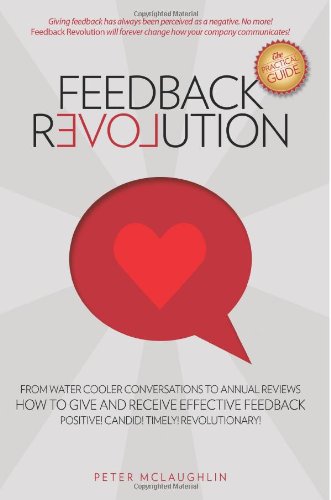
An analysis of the book Feedback Revolution by Peter Mclaughlin

Feedback can be in different forms, but the most effective feedback is one where the message can get across and not pass out through the other ear. An attitude of having doubts of "our own" feedback we give, presenting feedback to others with patience as a path to personal growth that takes time instead as a dead end, trying to give feedback continuously incrementally asynchronously, as well presenting the message nearest to the time of the incident are great points to embrace.

However, being empowering, a Mercy cognitive style, a mode discussed in the Leadership role in Executive Paradox, is not so easy, especially in cultures that do not embrace accepting any feedback from others due to people being sensitive about it. As discussed in Black Box Thinking, dealing conflict by hiding or twisting input to avoid confrontation makes us and society fragmented instead of having a pace of progress. First, people need to learn to give feedback properly as discussed. Second, organizations need to give people the ability to express themselves as much as they can while handling and teaching people to give proper feedback so it doesn't become abused or as a dead end that makes an organization detrimental. We follow this story in detail.

An objection to John Locke's view on punishment


Merging John Locke on Personal Identity & Black Box Thinking by Matthew Syed

Personal Identity was always a topic that I always felt bonded to explore deeply. It really touched me to unravel Locke's Argument "On Personal Identity" over the period of years since the first time I read it on my "Intro To Philosophy:Values" class in San Diego City College. Locke's argument that is still controversial to this day is whether we should punish a character's mistake to the same degree even when the current character of the individual has shown legitimately actions and efforts that show the individual has learned from his past mistakes. Locke's argument on that is that we should, as long the individual remembers he did the mistake in the first place.

After reading Black Box Thinking and integrating such concept with the framework of Mental Symmetry and Executive Paradox, I object the argument of Locke's view on punishment. I present examples that point out that having consciousness of past actions are not a good enough basis of punishing a person rightfully. We should give a choice for the individual to quantify his level of misalignment to society by how his present attitude views the world presently. What matters is the character the individual is and tries to aim to. In addition, instead of punishing a person being the only choice, we should give the option and awareness to society for the guilty to embrace what steps are required to align himself with society. We should have the platonic form that people that did mistakes can have equal chances on becoming one day the presidents of this world instead of looking at clean record sheets. It is only by handling mistakes that we can learn to improve ourselves.


Analyzing the book Natural Cognitive Theology by Lorin Friesen

If we simulated beating the challenge of unraveling "mind and human behavior" as a vintage Super Mario video game, then treat the rest of the topics discussed so far as easy or challenging levels while this one in here as running through a boss level. It took me around a month with full effort on reading and grasping most of the material of this book. The reason it is not that easy to read is because it discusses the topic of theology and it brings mental pain when it embraces a theology which discusses which mental circuits are potent and which ones lead you to a dead end explicitly. Because believe it or not, our culture and way of doing things consciously or subconsciously may contradict with what the book discusses.

We have seen Philosophy brings a framework of how things work, such as mental networks being described within the book The Power Of Habit and Contributor cognitive style being described within the book Executive Paradox. Mental Symmetry framework covers that and many more. We also found books that describe a way of doing things in life, such as: 1. Learning from mistakes from Black Box Thinking 2. Stretching our other modes of thought from Executive Paradox 3. The attitude on the way we give feedback from Feedback Revolution 4. Becoming independent of external influences by embracing to control our habits by a use of a framework from The Power of Habit. We see all of them in some way teach a way of doing things, a theology. We shouldn't tone it down or be in denial about it, it is a theology, for avoiding such foundations, it does not make our society able to continuously progress itself. The book Natural Cognitive Theology describes how the current state of theology has stray away from the original colors of theology that used to bring advancements to our civilization. In contrast, out of the mill journalists, independent researchers and others who dedicate the study of human behavior bring forgotten pieces that embrace back the true colors of theology.

The book Natural Cognitive Theology tries to describe how mental symmetry as a model can be used to study the topic of Theology correctly, which if done properly, it can bring faster advancements to the development of human behavior and our interactions with other human beings in order to become more sophisticated, integral, and fulfilling to society. It will bring the same transformations as how science advanced the empirical world to our physical needs.

Conclusion - Aligning skills with mental map?

The process took long like getting a Master Degree, but it was well worth it. Now my skills can be aligned with some purpose instead with no purpose at all. I know now what skills I need to learn and where to align them exactly. Next post will detail my assessment to how I reached up so far and why my current direction has to eventually walk down to the ground firmly where my skills closely align with my path.


At first I was nothing
Then I eventually got skills but had no purpose
Then I eventually ended up knowing my purpose but did not got my hands dirty
Now it is time to do my rite of passage to commit my purpose with the required skills to create real value to this world.


2016-07-02

Introduction of the books "Power of Habit" and "Mind what you wear"

You can read my review of the power of habit and mind what you wear in order to understand a brief summary what these books are all about before reading on.

Humans live within concrete world. Thus, it is hard denial that people's transformation starting point is by looking at our norms.

In order to support those statements, those conclusions that I assert above, I will use sources from the above two books: "Power of Habit" and "Mind what you wear", along the theory of mental symmetry "mental networks", "maslow's pyramid", and "music"

The power of habit:  Humans live within concrete world. Thus, it is hard denial that people's transformation starting point is by looking at our norms.  What I am implying here is that concrete habits is the starting point for all personal development. That is how our childhood starts its learning process, as discussed in Piaget Childhood Development. That is how students achieve goals in the education system. They don't crave the routine itself (the benefits of having substance of understanding how the world works), but instead they crave for a concrete physical reward (the physical degree so they can earn more money in their lifetime, the praise by parents or the peer pressure of a diploma degree in order for the approval of low ties of organizations that we want to work for). The point is that I have found over and over again and I find self defeating myself that we all start learning and bridging routines and procedures not because we are craving the routine or procedure itself because we acknowledge it benefits us, but because we put boundaries and rules (where putting requires will power and boundaries and rules represent self discipline) artificially, as an indirect approach to still fulfill our old habits (getting the same reward) while also fulfilling new habits at the same time (the new routine) that can help us later on to take over our old cravings with cravings that match with our new habits. You see, some people later after doing education forcefully, acknowledge later that education was not ever about the degree or diploma, but instead to improve our way of thinking, or most importantly, to enable our main circuits, to understand how things work correctly, and by correctly, I mean to fill out our minds with content, to create out theories out of them, to dispute them by using critical thinking, and so on. Those elements we were taught in school, we would never imagined at our prime time of our age, on how useful later they could have been in our adult life, especially habits that reflect on making the most optimal decisions. Thus, it is imperative to understand that people have to understand how this framework of behavior works (which the power of habit describes) and once that framework of behavior becomes understood (in this case: cue-> procedure-> reward), it becomes an abstract habit (the other side of the amygdala will notice and make it as a theory). It is a habit that this book does not describe in detail, but it is the essence of how belief works. So if there is a god, it is a god like Dirac have said: One of mathematical beauty, where wherever we place variables in a theory, such as a formula (in this case the framework of how habits work), they would essentially print expected instead of random results. So if god exists, then that god must be the same essence of the scientific formulas of the objective world. But instead of analyzing how things work, we instead care for the first time in generations try to analyze how people work, and base of just that, we found from natural cognitive theology,  that some circuits give the same reward, one with content, and one without content. I propose that filling with content on how people work, such as this book tries to achieve than instead of making it as a mystery, gives us more control to our life, as the author have described within the end of the book. The author tries to express that there is a lot of ways to substitute our mind with other concrete habits. That is true. However, for abstract habits, for abstract theories, a world where academics show a crave for understanding how things work, a use case where you only see it in academics and not with the average person, we found that theories are not an easy substitution. There is not a lot of theories that are replaceable. And as Thomas Kuhn Scientific Revolutions describes, most scientist live and die with a partial understanding of the scientific discoveries and instead it is usually the young scientist that takes the lead with a better complete understanding on how the world works. It is the same feeling as being addicted to gambling, not because it is impossible to choose differently, but unlike the concrete world where the choices are multiple to replace an existing routine to get the same reward, theories are always limited and requires a long journey, especially given that theories require a lot of time and effort to study (instead of 5 minutes to grasp a concrete concept, this may take months and years), and as always, the habit needs to be formed as an indirect instead of a direct way of understanding how things work (like how students learn stuff from schools). This concludes us that the book "The Habit of Power" by Charles Duhigg, focuses on habits that are of concrete nature, or in regards to the theory of mental symmetry, we can also name them as "mercy mental networks". These mercy mental networks are the base on how most of us individuals drive our world (except less inclined to that is me :) or people and scientists that are obsessed with theories ). After several attempts, it is apparent and self defeating to admit that talking to them an indirect concept as a direct concept is kind of impossible for most individuals to even grasp. It needs kind of to be "sandwiched" with some familiarity as the book describes and requires a craving that is unrelated to the concept you are describing, feeding instead an old habit in a different procedure in order to replace the new habit with the old habit. Grasping those concepts are quite important because believe it or not, once you reach this stage and understand the theory of mental symmetry, think not whether you are an open minded person for accepting such theory, but think of how other people whether they locked into a different theory and they believe this theory works for them but they don't notice the externalizations that they affect by imposing such theory. So I kind of realized, especially for strangers, if you want to make a connection and guide them, think of them as the devil-advocate, the worst case scenario, or else, most of the time your communication will fail on getting across the point.

Mind what you wear: The second thing is discussing about self actualization, the highest floor of the Maslow's pyramid. Maslow's pyramid and its reflection to mental symmetry can be found within the old book of Lorin Friesen "God, Theology, Cognitive Module", as one of the last sections within the table of contents. I advise to read that before moving on. The book "Mind what you wear" by Professor Karen J Pine, is an extension of "The power of habit", discussing the habits that are influenced by the cues we set to our self (the power of habit instead focuses mostly only on describing the routine and the reward within the framework of a habit). Given that both authors were a lot inspired by the father of Psychologist, William James, specifically, the material self, it is no wonder that they are good pair to just join those two authors together, as they essentially, describe the same topic. It is essential to understand that self actualization is the final destination of our own individuality to flourish. It is the only component where there is nothing "above it", "no pressure to reach other goal", "it is the final destination". Thus, instead of looking at self actualization main essence, we have to grasp how we reached in self actualization in the first place, which always comes from esteem, either directly (external self esteem with no content) or indirectly (internal self esteem with effort to gain some content to that motivation). We know external self-esteem is more crumbling, but alas, here is the main point of the theory of Maslow's pyramid: If there is no internal self esteem, external self esteem overrides over. External self esteem can be described as peer pressure of others to give approval to you, the clothes you wear, and many other elements that boost your confidence. Imagine how many people have build any internal self esteem to themselves except of their required qualified skills to be employable on a career role? I assume many do not have any content filled in the internal self esteem, so that is why we live in a world where we are overclouded with external self esteem and be governed by it. Especially for strangers and people you do not know, the only way to express themselves is through external self esteem. However, that external self esteem should compliment with internal self esteem in the process like how education works. It is okay for our clothes to reflect our external self esteem of "what is" and "what we could be", as long our internal self esteem aligns on that same mission. It would be a mismatch or a hypocrisy, if what we wear, is what we do not actually become inside. It is interesting that women wear clothes to express their mood, but it is not essential if they don't put any effort to fill in content that represents their expression. In retrospect, men who ignore to caress their external image against only caressing the internal skills is not the full throttle life is all about,  as people that do not express their identity externally to the world will not make a huge impact as they could in their full capacity. There are many other people that we let try to achieve that which they do not fit internal content in their heads, a more flawed map or strategy that fills peoples needs inadequately. So as long you are miles ahead relatively to others on fulfilling a better mental map externally as a journey, it is a wasted effort the benefits it could accrue to society if you didn't started more earlier on contributing on that or being the main core of such mission instead being a service of worship of someone that has a worse mental map than you do (does that make common sense?). In addition, apparel is a self reflection of our identity, in the same way music becomes a self reflection of how we view our world as. Thus, the analysis of music with mental symmetry which the author describes, which was one of his main core parts of his life, can also make me describe apparel with mental symmetry as well, which was part of my whole career so far, as well my close relatives (my passed away mom and my current wife) were/are big fans of apparel.

Now that the introduction is over, I will briefly describe an analysis of each book in detail.

Notes about the "The Power of Habit - How Mercy Mental Networks work"

Chapter 1: The Habit Loop - How Habits work: This is kind of a representation of how a static character represents. In this chapter, they describe a patient as a use case on how the habit loop works. However, habits always get influenced by new content and they alter in terms of variation and taste, can become stronger, can become less stronger, and be overridden with other habits. In this case, it seems all input trigger habits are then disabled to be outputted after a routine and successful/failed craving has elapsed, as usually, a new input for the habit to self assess itself or be influenced as it happens by default is not there. If assessed with bad emotional experience, it will not notice it next time. If assessed with a new event that can convert us to a new habit, the motivation will always be driven in the same format, always being seen whenever we see the same cue, it will always will feel like we are converting ourselves as a first attempt instead of an iterative attempt that makes the new habit that wants to replace an old habit more stronger and stronger. It seems time has frozen to that individual for his character did not progress any more to new experiences other than just showing all the different habit loops if the character is static. It is pretty freaky but at the same time scary to say the individual has stopped to gain growth to itself, but for one thing we can say sure is that whatever he picked up from the past, he still attains, the same foundations, the same beliefs, the same love, it is just that he doesn't has any system of flow in his mind to alter existing habits with new information, that even if he pushed against strong will power, and even if he did so, he would not realize next time to create such strong will power again cause he doesn't recollect he did strong will power before, to change his own character anymore. To many of us, it is a question to ask: If we had the ability to disembody our-self as philosopher Swedenborg has once said, and if habits is what represents the essence of our individuality, as Aristotle Nicomachean Ethics describe, is that how we will live for our rest of our life if we don't have a brain anymore to influence of changing our existing habits? Is this an acceptable way to live and if so why? And if we lived that way, does it make sense to create a static habit that we are able to respond in the world in the most efficient way as possible no matter the circumstance, like a scientific formula is always unalterable? Test and see if you can live your life with a habit that you never change (place it as a king) and see how long it lasts and don't think about changing it and see where it fails. For that reason, a theory like mental symmetry (even the theory of the power of habit cue->procedure->reward in a specific domain is much helpful than having no framework at all) is imperative in order to place a king that can fit most of our behavior to be compatible with anything in the world (I am not really confident on this, but it seem a theory imposes new cues or triggers so the individual can progress through the "same" theory next time it sees them instead the environment imposing what the individual should do. It is definitely a different way of seeing things and it is really scary and alienating to us, if such use case or scenario had to be).

Chapter 2: The Craving Brain - How to create habits: This book describes that we live our life with rewards as an enabler to activate certain procedures (that illustrates, such as Febreze had to change itself as a reward instead of a procedure. Febreze instead of removing odors resembling the activity instead became an enabler for people to clean the room more often while craving at the end to use the smell of the spray Febreze has). The reward concept of the "Power of Habit" was discussed much on the introduction in this post. In summary, rewards are an indirect way of changing old habits with new habits. In here, it describes that no procedure cannot be fulfilled without any reward. The point is that a reward does not need to be of concrete essence always. It can also be an abstract essence as well. Understanding how things work, an "a-ha" moment, making all things fit together, is a craving that people want to fulfill again and again, and the possibilities of fulfilling that habit becomes endless, as each event in our life is like a puzzle that awaits to be solved by the use of some understanding. For instance, using the framework of the power of habits cue->procedure->reward becomes a habit to fulfill the craving of our understanding, by replacing old bad habits with new better habits, and then improving new better habits with even better ones, an iterative process that never ends by the craving of gaining understanding of topics we had no clue how they worked before. I think ironically, this abstract habit, which represents a theory, according to Thomas Kuhn scientific revolutions, becomes a king of the king of all habits, as a meta-habit, describing habits about habits. Having this framework and having faith on it that it will stimulate the cravings of understanding (which we will see later on the next chapter how faith emerges) is the most powerful way to control our habits. No wonder this book was popular and thank god it is, because now its more easier for people who are familiar with this book, to connect them in some way, if we want to discuss them how the brain works. In summary, this book created a new habit that it would not emerged if it wasn't observed by scientists and discovered, if it wasn't described in a book, if it wasn't read by many to use it as their main application and be driven and see its positive results, just like new technology would not emerge if a scientific theory was not discovered, written, taught and create products out of it. Next chapter talks about "procedure" and beliefs on changing a habit.

Chapter 3 The golden rule of habit change: Why transformation occurs: Here it talks about two concepts. Substituting habits and having faith that things will work. As in economics, where purchasing power can influence people buying alternative products that have the same benefits (lets eat cheddar cheese instead of Swiss cheese), so our habits can find alternative habits that can push the same rewards. One of the key points is how to master a skill. If you are jack of all trades, it is impossible to master a skill. It is important to have confidence that you can do a skill and that happens only by the repetition of doing the same forms of actions again and again, such as playing the piano. The essence is of course deliberate practice, but before deliberate practice, we all start at deliberate practice when we try to learn something new in the end. In the example of the football use case described in chapter 3, people had to master the habits of reacting immediately and not thinking of uncertainty, but that takes time, as you have to fill the gap of the uncertainty to certainty by filling all the use cases. At some point, you have to remove the plug and stop having doubts to yourself anymore even if there is some marginal error that your cues did not respond correctly, but the marginal error is so low, that in most cases you read the play correctly. That is the use case or framework or theory that the coach instructed to the players, that if they followed it, they would gain the craving of winning. At first they had doubts, but later on they believed and they started to win games. However, when reaching to the final game, their belief was tested to their limits. This is no different than when you have to play piano under huge audience. It is when feelings overwhelm the mind of uncertainty and let the mind become in a frozen state. In the case of playing a melody, we do remember the notes how the melody plays in the piano yesterday through our tip of our nose, but when it comes on the day we have to play on the huge audience, we start to wonder with contempt whether I really actually remember how the melody really is in our mind or not. It is this type of adversity or authority, in this case the audience, that tests our faith under how much level of pressure we can be confident that we can pull it off.

Chapter 4 Keystone habits or the ballad of Paul O Neil: This is an interesting chapter that discusses how small habits can change a set of habits that are associated or labeled under the same category. Figuring out which small habits can be represented keystone habits is of essence, as not all habits can create a domino effect of influencing other habits, but many can do, and some in greater or less effect. What keystone habits have a pattern is that there is a form of generality, that is, the generality is not seen, you have to shape the generality, you have to describe and present how this habit fulfills several needs. For instance, Paul O Neil importance on "safety first" was not seen by people in the hope O Neil expected them to see it as. It took them time to see the effects of how this keystone habits benefited not only the workers but the company's costs on liability as well better quality products for the clients that receive from less defects. This in all turn-around benefited every role within the organization, whether it was an employee, an executive, or a client. Once a new habit achieves replacing an old habit, the mind can instinctively see what are the differentiation of the old habit and the new habit, as both are now explicitly shown instead of just implicitly acknowledged. Then it is very easy, given that now they are in empirical form, how the new habit type can be categorized as while the old habit type can be categorized as of, and then do more actions that resemble the category of the new habit. Keystone habits work in an essence that it makes an implicit thing an explicit thing, it is like the story when executives never knew that they treated people in poor conditions until somebody explicitly documented about it and they do immediate action about it. Contributor style focuses on small acts that have high frequency to occur as a major opportunity to control his destiny (this is the cognitive style that wants to have the most control compared to other cognitive styles). For instance, one of the traits of Contributor style biographically was found of being frugal in small transactions and sets it up as a keystone habit. Because unlike high transactions occur less frequently, acting on small transactions which occur more frequently allows the Contributor to make it visible to himself the trait of frugality so the individual is more prepared and already empowered as a habit on being frugal in big transactions as well.

Chapter 5 Starbucks and the habit of success when willpower becomes automatic: There is no such essence where willpower becomes automatic, as willpower always has a stamina. One I admit myself is this blog itself requires a lot of willpower, as it requires 1. lot of reading 2. lot of writing 3. while taking care of the daily needs of relationship/work/self. I would really wanted to articulate my writing more clearly, but I acknowledge the limits of my will power and put it as a plan to refresh this material in a book when I have more free time, contact connections, and able to make some small impact of what I have written so far within my life. However, will power is a true blessing, it is the essence of how freedom or free will emerges, it is by how we are able to fill content to new habits that are more motivated and able to crush existing habits. Will power in the book is described as writing plans to yourself. That is one of the great examples and it is one of the elements of my draft of my next social network to be (I want people to understand where they are, where they want to be, and have a plan on how to go there by understanding by what they lack and what new features they need). As the book described in Chapter 5, patients tried explaining all the bottlenecks they were about to go and how they would be able to resolve those obstacles, making these new habits breath new air when the cue arrived instead of being struggled by the existing habits when the event arrived. I think the best habit to enforce our self within our willpower is replacing a habit that looks at a tunnel-vision to a one that looks at the big picture. You want to address the problems instead of ignoring them and locking them like in a black box and representing it as a pandora box. Why bad organizations exist and why good organizations exist is between the ability to admit mistakes and create new learning processes that fills in the big picture and be prepared ahead of it next time instead of being narrow minded which we have seen in the black box thinking book, within the airplane, healthcare, and criminal justice system. Starbucks does not want its employees to re-invent the wheels. So for that reason, Starbucks train its employees to existing patterns the company already knows that people behaved not according to the full picture of things and made them as small exercises for new recruits to solve as homework so that they plan ahead how to react on those situations appropriately.

Chapter 6 The power of crisis. How leaders create habits through accident and design: A crisis can either represent learning from the mistakes of others or just stuffing it in a black box. Chapter 5 described how to resolve the situation of a crisis. Chapter 6 describes the opportunity of a crisis to either use or ignore it. It is up to the organization itself. Basically, this chapter is already devoted by a whole book Black Box Thinking by Matthew Syed, that gives in more detail and more stories about how failure can be a learning material, as it is the only way to grow ourselves. Thus, I did an extensive analysis of Chapter 6 by analyzing the book of Black Box Thinking. That analysis gives a more clear view (as it includes Thomas Kuhn Scientific Revolutions) what is going on with organizations when a crisis happens.

Chapter 7 How Target Knows what you want before you do when companies predict and manipulate habits: This chapter talks the essence that habits are predictable and the only time when habits change is when you are either forced to change yourself because you read a book like the "Power of Habits" (which is very rare and the book ironically doesn't describe that until the end, as it is used so far in schools, but maybe later it will influence worldwide?) or the environment changes with new events coming on our life that forces us to create new routines we never did before, such as getting into a new marriage, having babies, and so on. Those events need to feed new needs they never had to feed before. Those needs need to be fulfilled by companies where clients are not very familiar with. The one that comes early to the door step is the one that has high chances the customer will become loyal. That is how the retail store Target (according to current writing of this blog, it is the second largest retail in United States) got its big scoops of money - targeting people as early as possible who are on unfamiliar territory on new needs so they can become their loyal customers. Imagine if you have baby and you don't have the time to go outside because you have to take care of the baby. It is such cases where e-commerce, for instance, can grab that opportunity and make those new mothers as loyal customers. Not only that, creating a new habit, associating a purchase with a retail store, has chances of becoming a keystone habit, the implicit becoming an explicit thing, motivating people to buy everything they need (and not only for the baby) in that commerce site. The problem is that the retail target store knew way early with their algorithms, I mean way way early that their customers where pregnant, that even their parents didn't know that they were pregnant in the first place. It becomes a topic of controversy, so Target had to make the unsettling thing to settling, by making the coupons that they wanted to target to instead be filled up with other random items so it didn't appear that the company was stalking to the customer's buying patterns. This in essence tries to characterize the characteristics of a mental network by Lorin Friesen (which we refer them to as habits so far): A mental network expects a consistent input. Inconsistent input brings pain. The whole point is that actively changing habits is a thing we "choose" our self and "acknowledge" that we want to change an existing habit with another, as we even put "plans" to it, in order to motivate that habit to override our old habits.  In contrast, when we do not want to change an existing habit and others force us to change that habit, then we get more inconsistent input and we receive pain. For that reason, the act of having my own sense of privacy, even when reality is different and inconsistent with what the person believes, as long we don't show inconsistent input that we violate the sense of privacy, the person will still believe that people do not violate the sense of privacy. Here, familiarity to influence someone to adapt something unfamiliar is tossed out with the sandwich effect in order to influence people to change habits (mixing random items with targeted items to the customer to hide they actually spied the customer). I am not sure if this sandwich effect will ever make individuals accept that big brother is always be watching you or instead be in denial about it. However, I do agree a lot of cases where the sandwich effect does work. It is the same case of when going to school in order to get diploma. Money and being accepted by society is something familiar for a kid, as he receives allowances and approval by parents, but the use of understanding how things work is not something the kid can still grasp at that time. I remember in one of my class where cultures were classified as follows: American use Sandwich, Germans do not add any familiarity so they give the raw burger instead, while Japanese do not add any unfamiliar topic, so they only get the bread instead. That is maybe one of the reasons why the Japanese culture is something that is very hard to change, such as the gender gap inequality. In contrast, cultures such as Germany, may have to wire in a brain in such a way, that they are accustomed to not feel threatened by unfamiliarity and able to be much faster on adapting through changes.

Chapter 8 Saddleback Church and the montgomery bus boycott: This chapter describes how the power of acquaintances (low-ties), an external self esteem, is so powerful, that can set the whole society to a revolution. However, such form of revolution is not enough if it is not feed out with internal self esteem. For instance, the Saddleback church was not able to help all people to learn about the bible within the church, so what McGravan, the founder of the church, asked for its people, was to do their bible studies in their home itself. Only when we transition from external self esteem (lower motives) to a more powerful force as our internal self esteem (higher motives as in this example illustrates) we can hold more stability to stand on habits even under strong influence. What it means is that everything starts with lower motives, but at the end of the day, we should always strive for higher motives that will be the main pillars of support of our lower motives to still stand even under influence. Esteem is part of the Maslow pyramid. External and internal self esteem will be discussed more in detail when analyzing the book "mind what you wear".

Chapter 9: THE NEUROLOGY OF FREE WILL Are We Responsible for Our Habits? As I described in my previous blogs, our free will is based on our choices (also called as motivations), choices that only come out by creating a mental map (like the example of Starbucks creating a plan ahead) that can replace an old habit with a new habit. It requires a lot of willpower for the old habit to replace the new habit and once that new habit becomes from implicit to explicit, such as achieving a keystone habit, can transform the rest of our motivation to be pulled by the new habit as it is empirically visible. That can be used to replace bad habits to good habits, or the inverse, transforming good habits to bad habits, such as in the case of casinos. The casino example just alone without discussing about habits is just a great read alone, on how we manipulate habits within individuals. It is terrifying and any person who works on marketing should just pay attention when we manipulate habits of others that narrow minded focus on the domain of their profit. If we look at it through the big picture, it just crosses the limits of humanity, as it places infrastructures to enable or convert people from good habits to bad habits. That is why you should be grateful why government tries to limit gambling and other restrictions imposed, but at the end of the day, it is us as individuals, as discussed from chapter 8, that we should commit on internal self esteem (such as studying and understanding the book of the power of habit, makes us independent of others influencing of our own habits) instead of external self esteem, such as social ties, that are prone to manipulate our own habits. In supreme court, it was alleged that gambling could be similar as someone who killed a person unconsciously when they were asleep walking. The difference between the two is: the gambling person's brain is active within all regions at all times and if it became unconscious due to drinking, it was an act that was of no necessity. In contrast, sleeping is a necessity and when the person's brain does something while sleepwalking, a part of the brain becomes disabled and he is not self aware of the actions. Two stories one of necessity and in turn becomes a disabled mind and the other with no necessity to disable the mind and most of the time with an enabled mind makes the case of someone gambling not a one who did it involuntarily compared to someone who murdered someone while sleep walking. However, I even extended that the court system should go "beyond" Locke's unconsciousness on punishing people, but instead to what their current habits represent to limit the punishment level, as well the punishment system should be worked in a way where when the person gets out of jail, he becomes of better character and a role model of society, instead of becoming an individual that represents a dead end to society, as currently society judge people only by looking at his criminal record. As Black Box Thinking discusses, growth only comes from mistakes, not from avoiding mistakes.

"Mind what you wear"

This book essentially describes the power of external self esteem, as well influencing the cue within the framework of habit instead just focusing to substitute procedure to replace an old habit with a new habit or adding a new reward for a habit to become enabled. In this case we influence the cue with the use of clothes. By the nature of clothes are, unlike external environment, ones clothes go wherever we go and stays around us along within our identity (just like when you have someone close to you, like you wife and husband). This cue is something though that unlike our close loved ones influence us, it is instead something that we can choose how to influence our self by the use of clothes, as long others don't influence on what to actually wear. Closed relationship with people along with the representation of the clothes we use, represent to James William, as the "material self". Clothes not influence other individuals, but our own self as well, in the same way when we choose a partner to be our wife, it becomes in some sense a part of our identity.

If you compare with the essay about music essay in Lorin Friesen, you can get the similarities with what the author of "Mind what you wear" book and Lorin Friesen describes: clothes are more than just an aesthetic thing or a thing of taste, like the model being the canvas to paint something aesthetic. Yes, especially Lorin Friesen, describes in his essay that music correlates with science, so in the same premises, the author of this book describes how apparel influence us psychologically, making apparel a business at last for people to subject it with substance of science instead of all fluff and only care about the operations and just bench-marking only what brands just only sell. Like a business operation, what habits we instruct others to impose, can be either to facilitate others in decisions like Target does by helping maternity mothers to buy their necessary stuff (but its motivation most time is not really an altruistic act, but to gain loyal customers for profit, a craving that does not match with the original procedure), or it can be to facilitate others from good habits to bad habits, such as the casino industry does, or the pornography industry indirectly in some way if they try to use data analysis to make their customers addicted as each company's mission is something people try to obsess about, and so on.

We notice that some clothes make us more depressed, such as a buggy top, or wearing clothes that cover most of our body, such as jeans, or where studies report that we de-individualize our self, such as covering our head with a hoodie, or wearing a specific dress code that all have to wear within an organization. Lorin in the same vein discusses that music transforms people with no content these days. In these days we instead listen to very simple beats to feel the ecstasy of a rhythm. Songs today does not include a melody or journey, where we go from home, find an obstacle and fight with it, and then our old motivation gets replaced with a new motivation, such as like all sonatas come into those 3 stages within classical music. Classical musical has complicated rhythm that is hard to identify the pattern as the emotions are more complicated to express, yet for the good classical music listener, he can identify the patterns that are composed within the melody.

It is interesting that the author expresses that clothing can be a key cornerstone habit as the book implies in bold letters: "Get your clothing right and everything else will fall into place." Although I agree that it is a good starting point to use clothes as a bridge to communicate with others and also improve our self esteem, which is a valid point when James William had thoughts of suicide and tried to transform himself by taking control of his external reality. However, there needs to also have correspondence to improve according to Maslow's pyramid, our internal self esteem, such as in chapter 8 of the power of habit illustrates as the last main bottleneck for the transformation of a culture to erupt. So if we want to create a diagram of the Power of Habits in terms of clothes, we would have: Clothes -> Changes our identity to a new cue -> Different Routines -> Different Rewards. It seems that a new cue represent a substitute of another cue that can represent for doing the same routine, which the author defines it as "enclothed cognition". For instance, focusing on doing well on studies can be re-enforced by being in an environment, such as sitting in a classroom or library. However, if whatever the circumstances prescribe, if you have on your backpack a jacket of white coat scientist wear and strap it on, as the study suggests, you will be able to focus to solve puzzle exercises more nimbly and accurately than without it. Thus, enclothed cognition can represent placing cues that help people to enable specific habits (routine -> reward) to emerge by the use of clothing. Wear the wrong type of clothes for a situation, such as wearing swimwear clothes while doing a mathematical exercise, and as studies suggest, women perform worse than men with the same type of clothes. It seems women are more sensitive to external self esteem as the studies suggest. It also seems women are creating a platonic form by what the average person expects she has to wear in order to be recognized and get praised in order to get the maximum external self esteem (while in many cases, as opposed to men, ignoring internal self esteem, such as acquiring a skill, such as being good at math). As the study suggests, clothing is used as form of guiding to our self actualization by using external self esteem (the top 3 results are to be confident, comfortable, express myself while only 28% say to be fashionable). I suggest that we can extend chapter 8 of the Power of Habit to what other factors can create acquaintances. Besides strong friends can create acquaintances with friends of friends, acquaintances are easy to make by using clothes that are shown by peer pressure that you need to respect that person and compliment, as you feel you are connected within that social group. That is why people compliment some people that stand out with their clothes compared to others who just try to hide under the background with their clothes. Another reason may be is that most communication happens when one person wants to stand out and do something in the external word and the only way to do that is with the help of others. The only ones with high rate of possible candidates that can contribute are others that also stand out and do something in the external world. And in order to stand out, you have to wear clothes that are vibrant and makes you stand out more from the rest of the crowd. Thus, that is another factor that people can form acquaintances, forcing for another way a person to establish self esteem. But if you have seen in the last chapter 9 of the Power of Habit of Self Esteem, that was also a type of way the casino organization manipulated the habits of people by establishing a sense of being acquaintances. For instance, the casino spokeperson could say, "I gave you this and this and this, should you as an invisible contract, although you are not forced to, to give something in return back to me?". So that is how external self esteem is vulnerable if it does not have an internal self esteem that can hold as a pillar for those external self esteems to not be manipulated and get crumbled. In other words people need to have foundations (such as the framework the "Habits of Power") in order to not be influenced by  external pressures and instead be guided by internal foundations.

Last but not least, a great advice the author says is "What you wear mirrors your mental state". I totally agree that it does represent a mental state. But what mental state does it represent? A one that is hypocrite to itself , a one with lofty ambitions, or a one that wishes to improve himself, is trying to improve himself, and already improved part of himself? We all wish people wear clothes for the latter part reason. But in order for that to happen, people have to create a proper mental map, a proper foundation, a proper internal self esteem, that will more reflect their clothes actualize progressively become successful in their life and that they can manage their habits, wealth, and network with balance. Having the proper attire shows that you have the passion, determination, re-enforcing your mental map that you are ready to collide with the external world and make a difference. It means following the golden rule of habits as discussed in Chapter 3 of the power of habit: Believe in the mental map and follow them as natural instinct and follow ahead, as there will always be low risks that are unavoidable, no matter what emotions you will get rolled down against adversity. As my blogs go onward and onward, I see for the same effort right now, although I got new discoveries and connections, they become over time less and less, creating opportunities that I can start tackling myself where nobody has re-invented the wheel for those yet. The apparel industry is one of them and is one that I have worked for a long time and many people see there is no science to it in the same manner people disapproved in the old times where the female brain was no different than the male brain. If there is only one god, then that god must not be playing with dice, as Einstein said. So if that is so, let us find god in a scientific way, let us see how people work in the same way how we discovered how the world work, as we, part of being machine learners, I think our creator wants us to reach our ultimate state where we are conscious how not only the objective world works, but as well how the subjective world works. For that reason, I will focus how to make science on subjective stuff, such as in this case, how to create a personal integrated system (in the same way we integrate objectively different departments by an ERP: Enterprise Resource Planning) that there is an alignment instead of a mismatch with the mental map of internal self esteem against the clothes that creates the external self esteem which boost our-self and the external public. Since I am in this industry, fate or not, it is better to do something about it, as anybody else would love to have this opportunity and I become a burden if I don't do anything about it.

We talked about habits and we see some countries are progressively change fast or on average pace, such as Western Europe and United States while some change in a slow pace, such as Japan, by illustrating the example of sandwich, only meat, and bread correspondingly. A very recent article at the time of writing this post was posted that "Japanese women are being urged to swap flats for high heels to 'empower themselves' and improve their posture". We know Japan has the most slowest country to change the pace of eradicating the gender gap of career progression within its country that it tries to use tactics of external self esteem as a starting point for women to gain their rights, even when those external self esteem activities, such as wearing heels, academically and scientifically, are not healthy for women to constantly wear.. The article later says quoting "British people petitioned parliament in the UK, calling for a change to an outdated dress code law that allowed employers to require women to wear high heels in the work place.". In contrast, that means British women, a country that at least progressively has a faster pace of changing things more than Japan does, realized they have created internal self esteem that they are confident that they can do their part keeping the gender gap not going astray by not requiring to use external self esteem anymore. As Maslow's theory goes in terms of self esteem: If both external and internal self esteem exist, internal self esteem overrides external self esteem.

I think I hit grid and made all the lights of the town turn on. The world is more interesting and not boring after all. Lets live life instead of watching old soap operas. The real soap opera, creating science out of the subjective and the conflicts that will ensue is about to begin in the next decades. Improving operations (globalization) will be the old me at some point when we will have reached the peak of all infrastructures around the world be at its maximum capacity. At the same time, there is always exemplars that we learn from new use cases of migrating an existing infrastructure to different cultures, and for that, I do not say it was a wasted effort, for it  is a great thing for our current times. However, I think it is more exciting to lead to a "new thing" that can help the world exponentially substantially improve their quality of life.  Lets pack it all these nice things in a sandwich for these things and make sure they become explicit at some point in order for keystone habits to emerge and transform the world, shall we?

2016-06-25

Natural Cognitive Theology By Lorin Friesen Summary: Demistifying human behavior driven by 2 components: motivation and value

You can read my review of Natural Cognitive Theology in order to understand a brief summary of the book before reading on.

While I was reading the book Natural Cognitive Theology, I expressed that the study of the individual should not be taken casually but seriously, should not be taken as a peripheral element within the context of society but as a core element that can drive us "in" or "out" of the road on our journey on advancing our current civilization.


After finishing reading the book of Natural Cognitive Theology, I wanted to give a final wrap up of what I additionally learned and also resembling the very close similarities to the books that talk about "thinking about thinking" (meta-thinking), such as black box thinking, executive paradox, revolutionary feedback, clean thinking, and so on. However,  I also want to focus in here the driving forces of our behavior, which consist of 2 attributes: motivation and value.

Motivation creates value and value drives our action. Values is a thing I suppose everybody should already know. Values are the most deep rooted things in our inner self explained in several psychological books. It is that when a topic resembles more closely to our values, the more passionate our actions become. On the contrary, input from our environment that has no relevance or association to our values becomes a drain to process in our mind. It is more apparently that we do not have a free will and react based on our values. Just try to see what activities you do on your free time outside of your work and try to categorize them. Just check if there is a pattern in the activities you do and check on the time intervals on when they happen. Some of the activities you do in your free time are independent, but some are based on the dependency of others. When I mean "others", it can be the places you go, the people you hang, that they would not happen, because they only are triggered most strongly when your presence is surrounded or expect the presence to be surrounded if that entity we talk is a living and intelligent thing.  I have to mention, when we refer to entities, any atomic level of the entity still becomes a valid point. For instance, the entity does not require to be an individual. It can represent a group influencing another group, such as between companies, organizations, and countries. Those can be illustrated as what does one company does with acquiring another company, what happens when one government puts specific measures on an organization, what happens when one country puts measures on another country, and so on. On the contrary, the choices we do independently is usually because we think our choices is right and thus we do them. That because is due to a motivation, that motivation either be of empty or lack of content or with content, as we will describe later on. The important thing to ask is: "We have free will, don't we?". Yes, apparently, we do, but it can only come through major events when your own self have 2 conflicting motivations, and it is usually always in the following use case: "Your existing motivation that is driven by the values you already have and your new motivation that is driven to different values than the ones you currently have". If you try to look at your past history, where there values that show different actions that drive you completely different to the values that you have and act now? The breaking point in between those two most likely is due to our free will, two motivations embarked, leading the new one being stronger than the existing one. If the motivations is not strong enough, then don't expect any new transition. Otherwise, most of our life is locked by our values and the term "options" only comes if we find something else more motivating than what we already do. The point is those motivations (I would also refer those as active mental networks if I kept the terms close to the theory of mental symmetry) are very rare to occur to the average person in their daily life, and if they do appear, in most cases, they are not strong enough to overlap of our existing motivations, making our life for most of us individuals to work most of our activity of our life to the same existing values for a series of years. That is why society is very easy predictable in most cases. We know that a behavior of "most people" (pay attention here that I don't focus to one individual here) will not change overnight so we can have high strong confidence on the evidence we grab from the user behavior will still retain a consistent pattern for an extended period of time. Now add some handicaps to your desire wanting the user to use X product, then the only thing you have to do is either creating an environment that makes it dependent to be triggered to do that activity or boost more content that supports the motivation of that individual from other threats that can be de-motivated, and you have more higher chances (more stronger confidence) than before that the people will still keep consistent that pattern. As in statistics, the value that we want (i.e. be healthy) is predetermined by our choices (i.e. are we eating healthy? do we avoid smoking or drinking alcohol?). Thus, in order to reach such value where we are the most healthy, we look at all of our options, and we see which choices makes us the closest to our value. The theory of mental symmetry describes this concept as divine sovereignty, such as the light does a refraction within the medium of the water in order to reach to the least time. That is a platonic form which in real life we can never reach, but when we try to make decisions, we always try to check all possibilities (when in reality, we cannot have all possibilities) and pick the best output for our value we are motivated for.

Now let us examine how motivation is created. Motivation can be created either with content or without content. The interesting thing is "content". When we do science in the objective world, our motivation to solve our problems was always based by content. We try to find patterns that create a platonic forms (such as math) and then we create use cases or examples that fit a specific category for a platonic form (that is what science does and we call them as exemplars - hence, it is important your content to have relative works out of it). Those two fill the content of making our objective world with layers and layers of abstractions that become reliable because our previous layers of abstractions were able to hold as a foundation for the next layer of abstractions to stand above, like constructing a building with a lot of floors. It is all about understanding how things work. However, that was not the case for a lot of years before in our history. The thing is it is bad to do stuff without first understanding how things works in a platonic form in our head first. That is, if we are more away from our platonic form, then our works, whatever will be, will not align with how things work externally precisely. Our values will be partially filled due to motivations of platonic forms that didn't study the matter of the world precisely enough to understand it well. On the other hand, hanging too much on platonic forms and showing no works out of it will not liberate us to create beauty to the external world and create more layers on top of it. As actions represent the values that we hold, we keep that motivation being the living thing and pushing others to follow as an example while any other motivation becomes a thing that remains dormant. That is what a lot of years before the renaissance times life was like. The motivation of science was always there, but not so strong as a living thing that will capture the whole world to appreciate its true value. There was once time, as the book of Natural Cognitive Theology describes, Alexandria hugest library, becoming one of the wonders that could lift the world at that time in the same premises like the renaissance times did, but unfortunately it did not, as the major motivations of society these days was tribes conquering other tribes, like the game of Warcraft, not having a true understanding at that time that there were other values that if everybody was motivated, would have made a world better with less resources to waste and become scarce abundant not only on the average daily needs the individual required at that time, but to exponentially grow the activities that they could manipulate and communicate with society, such as we do in today's age with technology and science.

Such motivation we have today to make our objective world a better place. Let us look at the example of the airline industry. The airline industry created a platonic form to have the least accidents as possible. A flying airplane is a very complicated machine and is under pressure by different environments high up through the air, requiring pilots to be very careful on their flying patterns, for any mistake could become a full casualty. When the airline industry started, crashes were very common and the process to avoid flight accidents at its inception stages didn't have the adequate impact to reach close to the platonic target to reach little to no airplane accidents at that time. However, given the airplane industry had a scientific attitude, embraced transparency and avoided mental networks of culture and authority to interfere and tamper with filling the actual content of the data, they were able to create a system where all pilots had to learn in order to become effective on the objective platonic form of having the least airplane accidents as possible. We see the airplane industry practiced the same traits of attitude like the great library of Alexandria. At that time, Alexandria tried to not be under the influence of pantheism and other authority figures. All cultures focused solely on that time on integrating the concept of god as how things work, making that era as one of the biggest concentration of scientific achievements. Similarly, the airplane industry, created a lot of reforms to its system of how it handles things: Pilots publicly reporting all the accidents and flights that had high risk so everybody could gain access and learn. Private investigators that could check the incident carefully. Adding procedure and rules as part of the norms for staff and pilots to follow in order to minimize behavior that could yield high risk of airplane accidents. We can see that if we retain a platonic form that defines on how things work instead of people's desire on how things we wish to be, then the content that we fill on each exemplar that we do (in here, our reaction on every airplane accident that happens), our reality becomes closer and more closer to the platonic form that we want to achieve. There is still a problem with the example of the airplane industry, where the type of righteousness we have here, which by definition means a platonic form matching with the reality of the world, is only contained within the norms of the airplane industry and in most cases not contained within the people. That is, it would be more interesting if instead the norm being the living thing to motivate people to do what is right, for people itself to motivate people what is right. That is, if people look at those concepts of rules and procedures beyond just a norm to follow, but instead to the underlying structure why these norms where created in the first place, then people would be more pro-active and more motivated to do more than what those norms and procedures state in order to get more closer to the target the platonic form wants us to reach. I do not state that people are not motivated in the airplane industry, for the actions of publicly reporting airplane accidents and high risk incidents, as well the interest of understanding how things work, as long those foundations are driven for most people working in the aviation industry, then the platonic form and our reality will not stray away over time. When there is a mismatch with the motivation of individuals and the norms, then there will be a strong willingness for individuals to influence the norms of the platonic form to not follow the procedure of how things work to a procedure that mitigates or adjusts things to be less of an issue to examine the contents of the incident. That can be attributed to the healthcare industry, where in many cases, they have a lot of liability and accident costs, where the norms don't justify of the original platonic forms hospitals intended to do " to save every human possible life as possible ". Accidents happen and we cannot do much about it, but what we can do is what "we could do in the future" for this accident does not happen again, as after all, platonic forms mission always strives on "what could be" as opposed to sticking or covering up what already happened so we follow the utilitarian principle of making the most people happy and reduce the least conflict.

This attitude that a lot of healthcare industries have is an example of doing decisions by not filling content and contemplating that we are still doing the right thing, a shortcut of the mind that drives motivation of a platonic form that ignores reality. This can be illustrated by one narrative a teacher on theology discussed that when he visits a church, to paraphrase with my own words, the atmosphere of the environment becomes so captivating that it influences the mind. I am not intending to say that being emotional captivated by a thing is wrong, especially when we have a lot of problems that need content to be analyzed, as they can be stressful, and having a "small rest" is essential if you are too much out of your comfort zone, but making our whole lifestyle being captivated emotionally like the healthcare industry does is like we are avoiding content, avoiding reality, making the platonic forms that were originally intended by the founders to stray away to what we actually do. Other examples that I can illustrate is when you are under pressure or somebody places authority on you, you are more prone to disable perceiving and making sense of things on your environment, because you become overwhelmed with emotions, and usually most of our choices in reality that end up bad is usually due to that. Again, I have to illustrate that platonic forms are of the essence of "what could be". I think neurologists know that much more better than I do. One neuroscientist teacher could state "why don't we think of how to fix things ahead of time instead of patching things up".  And the main point the reason of the cause of that is because we don't have a progressive action on filling up content on a platonic form that leads to little to no mistakes and we leave up instead to be forced up to "learn from content" when reality and the platonic forms we held are so stray away that it is inevitable to still defend ourselves and say "well, it is a small mistake" as opposed to the counter evidence that we cannot emotionally avoid.

In summary, we saw that lot of organizations follow the platonic form of how the objective world works, but some, such as the healthcare industry did not, and are starting to force to learn from others the correct practices. But let us turn around and see how we looked at "how things work in the objective world". Before the renaissance age, most individuals looked things in a superficial way of how things work, attributed to pantheism or gods where its transcendence is something where man cannot understand. People placed strong value on a god with no content, but those bets, at least on the objective world, turned out to be wrong. Man can understand how the objective world works by creating a platonic form  (math) that can match with reality with exemplars (science) that create layers of abstraction within the objective world that benefits humans to amplify the ability to manipulate and access resources (technology). As if I practiced theology, if god exists, then that god I believe must make sense and can be grasped in a similar vein as an object that lives in a computer program can grasp how the source code of the program behaves in the world. However, this behavior of transcendence with no content has not been faded out away, it is a shortcut humans can take as the epitome of their motivation that drive their values, and similar conflicts will exist like past tribes tried to contest science as sort of witchcraft or some sorts of curse in order for such subject to not contest the rulers of the party that controlled the world.

What I am bringing up to the conclusion is that we are starting to see a conflict again of the same issue again, but now on the subjective part, that is, whether we as individuals can be understood in the same way we apply math and science in the objective world. Nobody tries to achieve that because it is a very sensitive topic, as it impacts our own ego. However, when people think that they do have freedom when there are no rules to be contested against them like science does to the objective world, it is actually an illusion, as there is always some order placed either by government or corporation or society that drives humanity to work in a certain direction if it does not have a direction of its own self that benefits human society. Again, I have to emphasize, the platonic form society intends to do is whatever benefits human society to progress itself where no crime exists, less misunderstandings exist, people doing what they passionately love and contribute the maximum productivity, and many more. Yet those platonic forms are ideal, they are very hard to grasp if people are not motivated to achieve exemplars to those platonic forms, yet impossible to achieve any of it if the platonic form does not constitute of "how individuals work". Yes, I am intending to say that we should focus and learn more "how individuals work", and if all things considered, humans should not be an exemption of an entity that does not have a system on how its behavior is guided. Neurology, psychology, and other findings are closer to unravel more on how the individual works, and the times will come near, where we have to identify our actions in a mathematical and scientific way instead of being guided only by culture and norms, which is only an effect, and not a cause, on how our behavior originates. However, norms are important. It represents where our current state in our society is, it represents our current motivation. Based on those norms, they need to be tested for each activity that we are motivated, whether when it is tested against the waters or not, whether it is beneficial to society or not. As we looked at the example of the healthcare industry, those norms and cultures that were manifested were not potent and had to be discarded. However, they cannot be discarded without replacing a motivation with a better motivation, as our free will is usually guided that way. In order for a new better motivation to replace an existing motivation, that better motivation has to be created under platonic forms, under "how individuals work" in the first place. It is very not apparently something we don't understand how individuals work, it is more that we don't want to admit that individuals can be understood on how individual works. We do not want to admit that if we understood how individual works, then we could create better effective systems in place, like the aviation industry does. We do not want to admit that the aviation industry main factor for having an almost clean record of airplane crashes was due to understanding how things work not only objectively, but also by how people behave. We are embracing the same attitude of authority of Julias Cesar where we don't see the importance of trail pathways that contribute to understanding how things work in individuals, as in the same way Caesar didn't see the great importance was to keep intact the great library of Alexandria in Egypt. When such pathways like I and others do to envelop an opportunity for making our society a better place as all cultures idealize but instead here with content like science does and in the end we fail, they would see our history of today and see how the negligence and ignorance of other people covered us in the dust and see us missing an opportunity on how better and earlier our civilization would have grown to a culture where those platonic forms and reality become closer instead of separated as they always currently are. Instead many are taking the world as for granted and nothing that we can do about, creating subjects such as "economic irrationality of human behavior", and so on.

I don't think we are over yet on making a perfect world. We need improvements, especially on our attitude, to observe the world not only on how the objective world works, but how us as individuals work. Those will give us the energy to create systems that the individual is motivated to bring personal value to the world instead of the government forcing it, individuals to buy and sell values that are attributed and integrated to the personal development instead of only on improving our objective empirical world as opposed non profit organizations and governments subsidizing to such acts where corporations in most cases are fully negligent about it, making social responsibility a second priority. The mechanics that we still have will be in place. The important element is that we put the scope of people included in the system on how things work and attribute positive and negative value out of it, such as in the same way we measure between systems of healthcare and airplane industries. This in token requires a great heart as it requires to go out of our comfort zone. Strong attention should be paid that this is no different than having an obsession like entrepreneurs (also called as "inventors" in the theory of mental symmetry) do. It is expected that many people will follow the status quo and expect a lot of rejection from them or not having a complete full picture or they may be in alignment, but don't have strong motivation of grasping and taking action of the full picture. That which requires great heart also requires great rest, as entrepreneurs know that they have to have a balance with their life and that they cannot do everything by themselves. Instead, it is only to expect others to follow, to have hope that the whole world will unveil this same message that understanding with content will get us closer to the truth, which the limits become unstoppable when we hold to such platonic form, as it aligns with reality. See the impact of math and science to the objective world compared to the pantheism attributing the objective world being attributed to the suns and the solar system. Many will not be able to "not follow Caesar" and "work in the great library of Alexandria". It is a thing that the heart has to go out of its comfort zone and it is a thing that most people do not want to dare to.

Many people think that content as "how individuals work" do not exist, but they are blind, as there have been several and critical books that discuss how individual works in essential detail. After reading a part of the book of Mental Symmetry by Lorin Friesen, I tried to back up the facts of the books by reading other books that discuss about thinking about thinking. I found a lot of books that resembled very close similarities to the theory of Mental Symmetry, such as Executive Paradox by David G Jensen, and a lot of the illustrations above besides the book of Natural Cognitive Theology in this article come from Black Box Thinking by Matthew Syed. There where other books that talked about thinking about thinking, but within a tree of a forest instead of the complete forest: Those books that articulated parts of understanding people, such as Feedback Revolution by Peter Mclaughlin, as well parts of understanding metaphors, such as Clean Language by Wendy Sullivan and Judy Rees. Natural Cognitive Theology all correlate those 4 books in a greater big picture and places theology back to its true colors, like in the times of the great library of Alexandria and renaissance times, on understanding how the individual works as opposed to the traditional practices of theology we see today where they try to derive some understanding only by looking how cultures and norms of different religions behave. Natural Cognitive Theology tries to state that theology ulterior mission is to try to understand how things work on the individual level and then create its own versions of science and technology for the subjective part. Neurology (a lot of neurological findings describe accurately the cognitive styles of theory of mental symmetry), Psychology (Like Piaget childhood development), Philosophy (Like Thomas Kuhn Scientific Revolutions), and the 4 books that I just mentioned that discuss thinking about thinking are little helpers to unveil that path of personal understanding to such fruition. It is such content and more content that will unify people and improve our quality of our communication. It is like one of my teachers in neurosciences have partially said "Why do we have two different political parties? one on the left and on the right? They all share the same mind, they should be integrated instead." The book Natural Cognitive Theology by Lorin Friesen is not a book that looks things through making individuals being overwhelmed by emotions to understand the meaning of life like many other books do. It tries to fill in content instead of making a statement out of no content. It does things at a rational scientific level, which I think, scientists or mathematicians who believe only on math and science on the objective world, will be in faint love with this book as it looks all things from a rational perspective in the same veins of the subject of math and science, but in a subjective level, instead of an objective level. If you are keen to learn more about:
  • History:great library of Alexandria, the after effects of world war 1, the renaissance times 
  • Psychology: Piaget childhood development
  • Philosophy: Thomas Kuhn Scientific Revolutions, Plato, Swendenborg
And many other more inter-disciplinary studies that makes the book a topic that is very hard to dismiss. Which brings us to discuss the final thing about neurology: how our motivation is modulated. There are different paths that our motivation is modulated: technical thought and normal thought. This is very similar to what Black Box Thinking describes marginal gains as technical thought while innovation being attributed to normal thought. Neurology have found that normal thought (innovation) is a more high level type of cognition than the one people excel on a specialized skills, which is attributed to technical thought or improving marginal gains. Nonetheless, as both in Natural Cognitive Theology and Black Box Thinking books discuss, they are both important.

Technical thought or marginal gains only focuses on a specific domain and tries to improve that domain as much as possible by playing by the "rules of the game". Technical thought can be considered as being driven by an existing motivation and trying to achieve the most value out of the motivation. Mental symmetry describes that example as the game of chess where the domain is already limited by a set of rules, making it easy for the mind to excel within that domain after understanding all the rules within that set. That is how artificial intelligence was able to win a game in chess, to consider all combinations, and pick the most optimal path. In the same sense, in Black Box thinking, we have the example of the hot dog guy that won the hot dog contest by breaking the highest record two-fold. What the individual did was observe what things he could and could not do with the frame of the rules of that domain allowed and took advantage of doing things differently to bring the maximum value out of that domain.

In contrast, when focusing on only one domain, it doesn't bring the essence of innovation. That is what innovation comes in or normal thought by the theory of mental symmetry. What normal thought does is to create a new form of motivation to replace an existing motivation by filling content based on how things work. It creates a new mental map for a new motivation to thrive in. In such case, instead of focusing on a motivation to create the maximum value, it tries instead to create the mental map that will replace an existing motivation with another motivation by using the essence of normal thought. That is how dyson created the idea of cyclones in vacuum cleaners that disrupted the traditional vacuum cleaners that used paper bags. Instead of playing the rules of the game, in this case, you are trying to figure what are the new rules of the game (filling up the content), new rules of the games that were already there, but not discovered, because we were too narrow minded on the existing rules of the games due to the existing cultures and norms we are attributed to play along with.

I think there are so much more that I can discuss, but I think those are the main important points. If you are interested to learn more, just check the various free resources of the website of www.mentalsymmetry.com in the downloads and forum sections and check the book Natural Cognitive Theology, as it will make you see theology from a different perspective than what we usually ordinary do. In addition, I also need to mention that like how science and math are very hard subjects to learn, so mental symmetry is on the same level a very hard thing to learn as well too, and unlike math and science are subjects that society motivates us to learn, learning about our own self is something that people treat it an apophatic way or too deep that people think it does not bring any value to our world (as like when abstract math was looked in the same veins in the past too).